
Everything You Need to Know About Restorative Dentistry in Whitehall, Pennsylvania
On this page
Restorative Dentistry helps repair damaged, decayed, or missing teeth, improving oral function, comfort, and confidence. These treatments can restore the health and appearance of teeth while supporting better everyday eating and speaking.
Patients searching for Restorative Dentistry in Whitehall may have several treatment options depending on their dental condition and long-term oral health goals. Common solutions include Dental Fillings, Crowns, Bridges, and Dentures.
This guide explains common Restorative Dental Treatment their potential benefits, and important factors to consider when choosing the right treatment for your smile and overall oral health.
What Is Restorative Dentistry?
Restorative Dentistry focuses on repairing damaged teeth and replacing missing teeth to restore chewing, speech, bite stability, and overall oral function.
Unlike routine preventive care, Restorative Treatment addresses problems caused by decay, injury, fractures, significant wear, or tooth loss. The recommended treatment depends on each patient’s condition, whether one tooth or several teeth need attention.
Common concerns include cavities, cracked teeth, worn enamel, damaged fillings, and missing teeth. Treatments such as Dental Fillings can repair decay while preserving natural tooth structure.
Who Is the Ideal Candidate for Restorative Dentistry?
Many patients may need Restorative Dentistry at some point in their lives, but certain dental concerns make an evaluation particularly important.
Patients With Tooth Decay
- Patients with visible cavities or active tooth decay may need treatment to repair the affected tooth.
- Early treatment can help protect the remaining natural tooth structure.
Patients With Damaged Teeth
- Cracked, chipped, or fractured teeth may require restorative treatment to improve strength and function.
- Teeth weakened by previous dental treatment may also need additional care.
Patients With Missing Teeth
- Patients missing one or more teeth may benefit from restorative treatment designed to replace lost tooth structure.
- Patients who have lost several teeth may benefit from Dentures depending on their individual needs.
Patients With Chewing or Biting Difficulties
- Discomfort while chewing may indicate a damaged, weakened, or missing tooth.
- Difficulty biting can also be a reason to schedule a dental evaluation.
Patients With Gum-Related Concerns
- Patients with gum-related problems may need their periodontal health evaluated before restorative treatment.
- Periodontics may be incorporated into a broader treatment plan when gum care is needed.
Patients of different ages can require Restorative Dental Care for different reasons, including decay, accidents, long-term tooth wear, or tooth loss.
How Many Types of Restorative Dentistry?
Restorative Dentistry Procedures,The right option depends on the extent of tooth damage, the location of the affected tooth, and the patient’s overall oral health.
1. Dental Fillings
- Treats Tooth Decay: Dental Fillings are commonly used to repair teeth affected by cavities and restore damaged areas.
- Preserves Tooth Structure: Removing decay and filling the affected area can help protect the remaining natural tooth structure.
2. Dental Crowns
- Protects Weak Teeth: A dental crown covers and protects a weakened or significantly damaged tooth while restoring its shape and function.
- Restores Strength and Function: Crowns can help restore the tooth’s strength while protecting the remaining natural structure.
- Same-Day Convenience: For eligible patients, Same-Day Crowns may allow certain crown treatments to be completed during a single visit.
3. Dental Bridges
- Replaces Missing Teeth: A bridge can replace one or more missing teeth by using supporting teeth or structures to hold the replacement tooth in place.
- Supports Chewing Function: Dental Bridges can help restore chewing ability while maintaining a more complete-looking smile.
4. Dentures
- Replaces Multiple Missing Teeth: Dentures can replace several missing teeth or an entire arch, depending on the patient’s needs.
- Supports Daily Function: Dentures can help patients speak and chew more comfortably after tooth loss.
- Maintains Appliance Condition: Proper Denture Care is important for cleanliness, comfort, and maintaining the condition of the appliance.
5. Root Canal Therapy
- Treats Tooth Infection: Root canal therapy addresses infection or inflammation inside a tooth by removing the affected pulp.
- Preserves the Natural Tooth: When the tooth can still be restored, treatment may help preserve the natural tooth instead of removing it.
6. Dental Implants
- Replaces Missing Teeth: Dental implants replace a missing tooth by supporting a restoration from within the jaw.
- Provides Stable Support: Implants can provide a stable restorative option for selected patients who meet the appropriate clinical requirements.
Patients may need one treatment or a combination of treatments depending on the condition of their smile. A professional evaluation can help determine which Restorative Dental Services option best fits their individual needs.
What Are the Benefits of Restorative Dentistry?
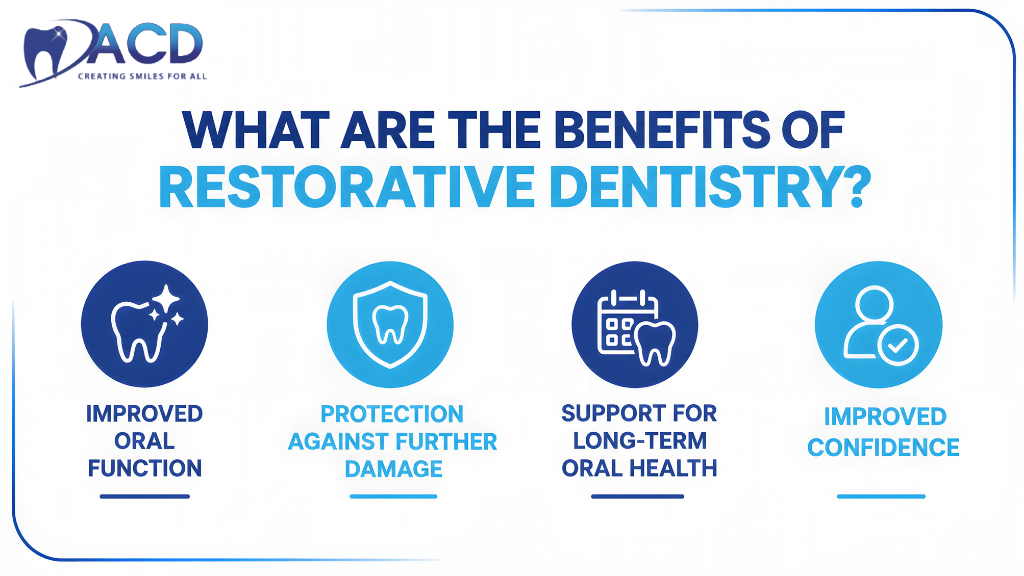
Restorative Dentistry does more than repair an individual tooth. Appropriate treatment can influence how patients eat, speak, maintain oral health, and feel about their smiles.
Improved Oral Function
- Helps restore normal chewing and biting
- Can reduce difficulty when eating
- Supports comfortable everyday oral function
Protection Against Further Damage
- Addresses tooth decay and structural damage
- Helps protect weakened teeth from additional breakdown
- May reduce the chance of more extensive treatment later
Support for Long-Term Oral Health
- Helps maintain functional tooth structure
- Supports healthier spacing and bite relationships
- Can help protect surrounding teeth when appropriate treatment is provided
Improved Confidence
- Can restore the appearance of damaged or missing teeth
- May reduce self-consciousness about smiling
- Helps patients feel more comfortable during everyday interactions
For patients considering Restorative Dentistry in Whitehall, understanding these key Restorative Dentistry Benefits can make it easier to discuss options with a dental professional.
How Is Restorative Dentistry Different From Cosmetic Dentistry?
- Restorative Dentistry focuses mainly on restoring the health, strength, and function of damaged or missing teeth.
- Cosmetic Dentistry primarily focuses on improving the appearance of teeth, including their color, shape, and alignment.
- Restorative treatments, such as crowns and fillings, can improve both function and appearance.
- Some patients may need Periodontics for gum-related concerns before restorative treatment.
- Oral Surgery may be recommended for certain complex dental conditions requiring additional care.
- Patients seeking Restorative Dentistry in Whitehall, Pennsylvania should discuss both their functional needs and cosmetic goals with their dentist.
Restorative Dentistry vs. Cosmetic Dentistry: Key Differences
| Category | Restorative Dentistry | Cosmetic Dentistry |
| Primary Goal | Repair function and structure | Improve appearance |
| Common Treatments | Fillings, crowns, bridges, dentures | Veneers, whitening, cosmetic bonding |
| Main Focus | Oral health and functionality | Smile aesthetics |
| Typical Purpose | Restore damaged or missing teeth | Enhance visual appearance |
| Dental Health | Addresses decay, damage, fractures, and tooth loss | Usually focuses on improving the look of healthy teeth |
| Long-Term Benefit | Helps restore chewing, bite stability, and oral function | Helps improve confidence and smile appearance |
| Treatment Need | Often medically or functionally necessary | Usually elective or appearance-focused |
Why Choose Advanced & Comfort Dentistry for Restorative Dentistry?
Advanced & Comfort Dentistry provides personalized restorative care based on each patient’s dental condition, oral health, concerns, and long-term goals. This approach helps ensure that treatment is tailored to the patient’s specific needs.
Patients seeking Restorative Dentistry in Pennsylvania can discuss their symptoms, treatment options, expected results, and maintenance needs before beginning treatment. Clear communication helps patients feel informed and more comfortable throughout the process.
From fillings and crowns to replacing missing teeth, Advanced & Comfort Dentistry focuses on helping patients understand each stage of treatment while keeping comfort, function, and long-term oral health at the center of care.
Conclusion
Restorative Dentistry helps patients address damaged, decayed, worn, or missing teeth while working toward improved oral function and comfort. Treatment may range from a simple filling to crowns, bridges, dentures, or other restorative solutions based on each patient’s needs.
Patients considering Restorative Dentistry in Whitehall, Pennsylvania can benefit from a professional evaluation that identifies the source of their dental concerns and explains the available treatment options.
Advanced & Comfort Dentistry helps you find the ideal restorative treatment tailored to your unique needs. Contact Us Today to learn more and Book Your Appointment for a healthier, more comfortable smile.
Frquently Asked Questions (FAQs)
1. What Is the Main Goal of Restorative Dental Care?
The main goal of Restorative Dentistry is to repair damaged or decayed teeth and replace missing teeth so patients can regain better oral function, comfort, and stability.
2. Who Needs Restorative Dentistry Treatment?
Patients with cavities, cracked or broken teeth, missing teeth, damaged restorations, significant tooth wear, or difficulty chewing may benefit from restorative treatment after a professional evaluation.
3. Is Restorative Dentistry Painful?
The experience depends on the procedure and the patient’s individual condition. Modern dental techniques and appropriate comfort measures are used to help make restorative treatment as comfortable as possible.
4. How Long Do Restorative Treatments Last?
The lifespan of a restoration varies by treatment type, oral health, daily habits, and maintenance. Regular dental care and good oral hygiene can help protect restorative work over time.
5. How Do I Know Which Restorative Treatment I Need?
The best way to determine the appropriate treatment is to schedule an evaluation. Advanced & Comfort Dentistry can assess the condition of your teeth and explain which options may best support your oral health and goals.

Advanced & Comfort Dentistry team
Written by the Advanced & Comfort Dentistry team. We provide personalized, comfort-first dental care for the whole family in Whitehall, PA — from general and cosmetic dentistry to implants and emergency care.