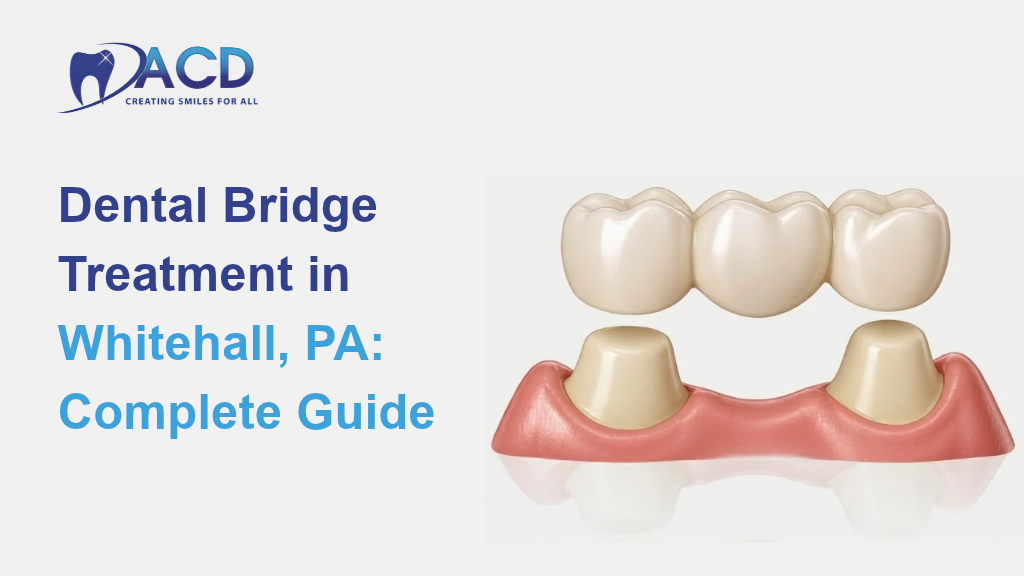
Dental Bridge Treatment in Whitehall, PA: Complete Guide
On this page
Dental Bridge Treatment replaces one or more missing teeth with a stable, fixed restoration that restores chewing function and fills the gap in your smile. Unlike removable dentures that may shift, bridges anchor securely to neighboring supporting teeth for lasting stability.
Missing teeth affect more than appearance; they impact speech, chewing comfort, and overall bite alignment. Understanding treatment options helps patients make informed decisions about restoring their oral health.
For patients considering Dental Bridge Treatment in Whitehall, Pennsylvania, understanding the procedure and care steps is key. Advanced & Comfort Dentistry evaluates supporting tooth health, gums, and bite structure to guide your care.
What Is Dental Bridge Treatment and How Does It Work?
Dental Bridge Treatment works by using custom crowns attached to adjacent teeth to hold artificial replacement teeth securely in place. This fixed restoration bridges the gap seamlessly, creating a reliable foundation for daily dental function.
Your dentist evaluates supporting tooth strength plus gum health for strategic restoration placement. Targeted fitting helps ensure proper bite pressure distribution while custom restorations restore natural function and appearance.
For patients seeking Dental Bridge Procedure in Whitehall, a comprehensive examination determines how supporting teeth should be prepared and how the bridge should be fitted for long-term oral support.
How Does Dental Bridge Treatment Replace Missing Teeth?
Dental Bridge Treatment fills gaps from missing teeth to restore chewing, biting, speech, and smile appearance. Dentists evaluate adjacent teeth and gums to ensure strong, healthy support for the restoration.
How Does a Bridge Compare With Other Options
- Traditional Design: Relies on neighboring supporting teeth, which often require prep work before placement.
- Fixed Alternative: Provides a non-removable solution without requiring jawbone surgery.
- Treatment Trade-offs: Addresses missing teeth without replacing the natural root structure.
- Implant Considerations: Dental Implants use jawbone support, depending on bone health, history, and gum condition.
Who May Benefit From a Dental Bridge
- Ideal Candidates: Suits individuals with missing teeth and strong adjacent support.
- Functional Alignment: Restores chewing ability while limiting tooth movement into empty spaces.
- Personalized Selection: Helps compare key advantages against budget, hygiene, and goals.
- Comprehensive Assessment: Evaluates functional and aesthetic needs rather than focusing on appearance alone.
Understanding the Benefits of Dental Bridges helps patients choose the right replacement option for their oral health. A professional exam ensures the treatment restores chewing function, speech clarity, and long-term stability.
Why Choose Advanced & Comfort Dentistry for Dental Bridge Treatment?
Dental Bridge Treatment is offered alongside comprehensive restorative care through a patient-focused approach. Evaluating missing teeth, neighboring tooth structure, and overall oral health helps ensure care is planned around each patient’s specific condition.
Your appointment is the right time to ask about comfort concerns, restoration materials, and treatment options. The dental team clearly explains the care required, so you know what to expect and can move ahead with confidence.
Advanced & Comfort Dentistry serves Whitehall, Pennsylvania, providing coordinated restorative support close to home. Evaluating dental health prior to treatment ensures patients receive appropriate care tailored to their needs.
What Is the Difference Between Dental Bridge Treatment and Dental Crowns?
While a crown covers and protects a damaged tooth to preserve its strength, a Dental Bridge Treatment replaces missing teeth by anchoring to adjacent supporting teeth across the empty space.
- Primary Purpose: Caps protect existing natural teeth while bridges replace missing teeth.
- Treatment Selection: Damaged teeth require full coverage while gaps need bridge support.
- Conservative Care: Tooth-Colored Fillings repair smaller cavities when sufficient healthy structure remains.
- Healing Expectations: Minor sensitivity or uneven bite feelings can occur during initial adjustment periods.
- Symptom Monitoring: Persistent discomfort or loose restorations require prompt individual professional evaluation.
Reviewing Dental Bridge Recovery and Aftercare helps set appropriate expectations regarding short-term care needs. A thorough clinical evaluation determines whether saving your natural tooth or replacing a missing one provides optimal long-term health.
Dental Bridges vs Dental Crowns
| Feature | Dental Bridges | Dental Crowns |
| Purpose | Replace missing teeth | Protect damaged teeth |
| Coverage | One or more teeth | One tooth |
| Support | Neighboring teeth or implants | Existing tooth or implant |
| Material | Porcelain or ceramic | Porcelain or ceramic |
| Main Benefit | Fills tooth gaps | Restores strength |
| Maintenance | Daily oral care | Daily oral care |
What Types of Bridges Are Used in Dental Bridge Treatment?
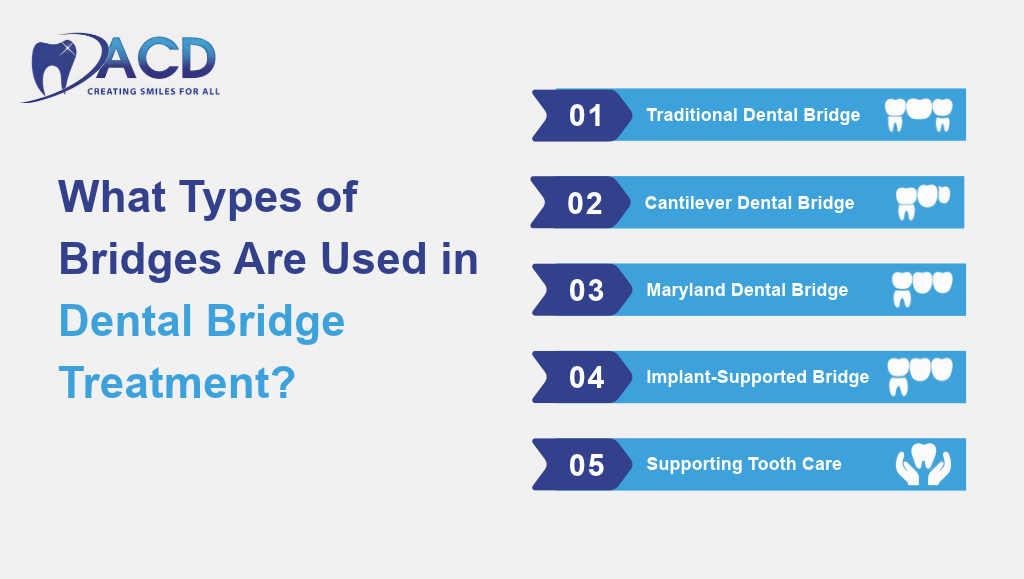
Selecting a Dental Bridge Treatment depends on the number and location of missing teeth, supporting tooth health, and overall oral condition. Your dentist evaluates these essential factors to determine the most effective design for restoring function and aesthetics.
1. Traditional Dental Bridge
- Neighboring Support: Crowns on adjacent healthy teeth securely hold artificial replacement teeth.
- Structure Removal: Preparation requires removing natural enamel from neighboring supporting teeth carefully.
2. Cantilever Dental Bridge
- Single-Side Attachment: Restoration attaches to a single supporting tooth adjacent to the gap.
- Bite Limitations: Heavy chewing pressure makes this design unsuitable for many locations.
3. Maryland Dental Bridge
- Winged Framework: Metal or porcelain wings bond directly to adjacent tooth backs.
- Front Replacements: Minimal preparation requirements suit selected front tooth restoration plans well.
4. Implant-Supported Bridge
- Implant Anchorage: Restorations attach directly to dental implants without affecting natural teeth.
- Surgical Placement: Oral Surgery may be required based on bone, gum health.
5. Supporting Tooth Care
- Root Canal Treatment: Affected nerves may require therapy to preserve restorable supporting teeth.
- Surgical Assessment: Dentists clarify whether surgical options are needed for complex situations.
Evaluating supporting teeth ensures the restoration remains stable, functional over time. Consulting your dentist helps determine the ideal approach based on expected visits, recovery needs, and overall oral health goals.
Why Are Regular Checkups Important After Dental Bridge Treatment?
Routine visits evaluate your Dental Bridge Treatment, supporting teeth, gums, and bite alignment. Professional monitoring helps detect potential complications early before they become difficult to manage.
1. Maintaining Your Dental Bridge
- Brush twice daily with fluoride toothpaste to keep teeth clean.
- Use floss threaders or interdental brushes under artificial teeth.
2. Protecting Supporting Gum Tissue
- Healthy gums provide essential support around natural anchor teeth.
- Patients with bleeding or swollen tissue may need Gum Disease Treatment.
3. Watching for Key Warning Signs
- Contact your dentist immediately if the restoration feels loose.
- Watch for persistent pain, swelling, or changes in your bite.
4. Addressing Minor Aesthetic Concerns
- Minor chips on nearby natural teeth may benefit from Dental Bonding.
- This cosmetic option repairs small imperfections without replacing teeth.
Regular examinations allow the dentist to evaluate bridge margins, supporting teeth, and bite alignment over time. Following a personalized maintenance schedule ensures your restoration remains functional, comfortable, and aesthetically pleasing.
Conclusion
Dental Bridge Treatment restores missing teeth, improves chewing efficiency, and helps patients regain confidence in their smile. The right restorative choice depends on the number of missing teeth, surrounding support structure health, and your personal goals.
The right treatment plan depends on an individual examination and comprehensive evaluation. Early consultation helps determine whether a bridge, crown, or another solution best protects your natural teeth and oral health.
Choose Advanced & Comfort Dentistry for personalized Dental Bridge Treatment care. Schedule your consultation to discuss your options. Contact us today to take the next step toward a complete, healthy smile.
Frequently Asked Questions
1. How long does a Dental Bridge Treatment last?
It can last many years with good oral hygiene, proper care, and healthy supporting teeth. Regular dental checkups help extend its lifespan.
2. Is a Dental Bridge Treatment a good option for adults in Pennsylvania?
Yes, it is a great option for adults with missing teeth who have strong supporting teeth and healthy gums.
3. Is receiving a Dental Bridge Treatment painful?
Local anesthesia is used during preparation to keep you comfortable. Any mild post-procedure sensitivity usually subsides quickly.
4. Can a Dental Bridge Treatment replace multiple missing teeth?
Yes, it can replace one or several adjacent missing teeth, depending on the strength of the surrounding anchor teeth.
5. How do I maintain a Dental Bridge Treatment?
Brush twice daily, clean underneath the bridge using a floss threader or interdental brush, and attend regular dental checkups.

Advanced & Comfort Dentistry team
Written by the Advanced & Comfort Dentistry team. We provide personalized, comfort-first dental care for the whole family in Whitehall, PA — from general and cosmetic dentistry to implants and emergency care.