

Dental Implants in Whitehall, Pennsylvania: A Complete Guide
On this page
If you have lost one or more teeth, Dental Implants can offer a stable way to rebuild your smile and restore everyday function. Unlike removable dentures, implants replace the tooth root as well as the visible tooth, helping create a secure foundation for a crown, bridge, or denture.
For patients comparing tooth-replacement options, understanding the process, candidacy, discomfort, recovery, and long-term care can make the decision easier.
Patients looking for Dental Implants in Whitehall can begin with a consultation focused on their oral health, jawbone condition, goals, and overall treatment needs. A personalized evaluation can show whether fit your situation and whether preparatory treatment is necessary.
What Are Dental Implants?
Dental Implants are small posts, usually made from titanium or another biocompatible material, that replace missing tooth roots. After the implant integrates with the jawbone, an abutment connects it to a custom replacement tooth.
Implants can replace one or several missing teeth or support an implant-retained denture. Treatment may include examination, imaging, implant placement, healing, and final restoration. The process can take several months while the jawbone heals around the implant.
Patients researching tooth replacement can learn more about available treatment options through Restorative Dentistry. Dental Implants in Pennsylvania may also recommend bone grafting when the jawbone lacks sufficient volume or density for predictable implant support.
Who Is a Good Candidate for Dental Implants?
Oral Health & Bone Support
- Missing Teeth: Candidates typically have one or more missing teeth and sufficient jawbone support.
- Healthy Tissues: Good gum health and proper oral hygiene support successful treatment.
Dental Examination & Planning
- Comprehensive Evaluation: Your dentist may use digital X-rays or 3D imaging to assess bone structure, nerves, and sinuses.
- Treatment Planning: These images help determine the appropriate implant position and identify potential concerns.
Existing Dental Conditions
- Treat Oral Problems: Active gum disease, untreated decay, or insufficient bone may need treatment first.
- Periodontal Care: Periodontics can help manage gum and supporting-tissue health before treatment.
Individual Evaluation
- Personal Assessment: Eligibility depends on your oral health, healing factors, and overall treatment needs.
- Professional Guidance: A consultation can determine whether Implants are appropriate for your specific situation.
What Are the Benefits of Dental Implants?
1. Improved Stability
- Provides a secure foundation for replacement teeth
- Improves chewing and speaking ability
- Offers more stability than many removable options
2. Natural Appearance
- Designed to look similar to natural teeth
- Supports a more confident smile
- Can complement your smile, and Teeth Whitening may further enhance its appearance.
3. Jawbone Support
- Replaces the missing tooth root
- Helps maintain jawbone stimulation
- Supports long-term oral structure
4. Durable & Flexible
- Designed to provide a long-lasting tooth-replacement option
- Requires proper oral hygiene and regular dental visits
- Can support single teeth, bridges, or dentures
For additional information, review this Dental Implants Benefits resource. Patients searching for Dental Implants in Whitehall, Pennsylvania can also discuss their options with a dental professional. Cosmetic Dentistry may also complement a smile-restoration plan when appearance is an important goal.
Are Dental Implants Painful?
During the Procedure
- The treatment area is numbed to minimize discomfort during implant placement.
- Sedation may be available when appropriate to improve patient comfort.
After the Procedure
- Mild soreness, swelling, bruising, or minor bleeding may occur.
- Your dentist can provide aftercare instructions and recommend suitable pain-relief options.
Preparing for Treatment
- Follow guidance about food, medications, smoking, and oral hygiene.
- Inform your dental team about medications, supplements, and health conditions.
Understanding Recovery
- Discomfort typically decreases as the surgical area heals.
- Your dentist can explain what to expect during recovery and address concerns before treatment.
For more information, review this Dental implant surgery overview from Mayo Clinic.
What Is Recovery Like After Dental Implants?
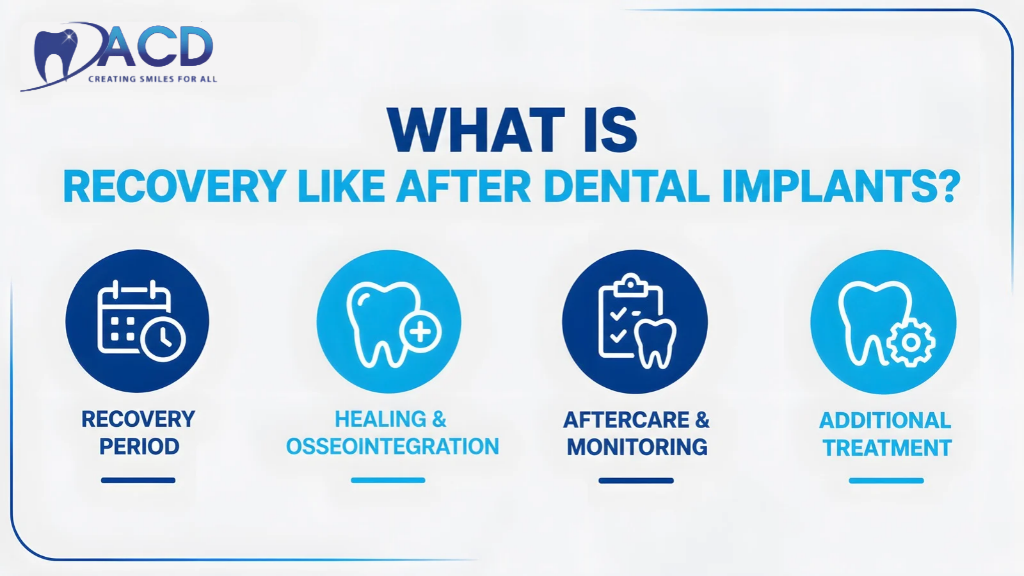
1. Recovery Period
- Healing Time: Recovery varies based on the number of implants, treatment complexity, bone grafting, and individual healing.
- Diet & Cleaning: Your dentist may recommend soft foods and specific instructions for cleaning the treatment area.
2. Healing & Osseointegration
- Bone Integration: The implant gradually integrates with the jawbone through a process called osseointegration.
- Treatment Timeline: This healing stage may take several months before the final restoration is placed.
3. Aftercare & Monitoring
- Follow-Up Care: Attend scheduled appointments so your dentist can monitor healing and treatment progress.
- Warning Signs: Contact your dental professional if pain, swelling, or bleeding becomes severe or worsens.
4. Additional Treatment
- Expected Healing: Healing is a normal part of treatment and does not necessarily indicate a problem.
- Oral Surgery: Oral Surgery may be needed for procedures such as bone grafting.
For additional guidance, review this Dental Implant Recovery resource.
Dental Implants: Benefits, Pain & Recovery
| Topic | Key Points | Simple Explanation |
| Benefits | Stability, natural look, jawbone support | Improves chewing, speaking, appearance, and tooth stability. |
| During Treatment | Anesthesia, sedation | The area is numbed to reduce discomfort during treatment. |
| After Treatment | Soreness, swelling, bruising | Mild soreness or swelling may occur and usually improves with time. |
| Recovery | Soft foods, cleaning, follow-ups | Follow your dentist’s instructions to support healing. |
| Osseointegration | Implant joins the jawbone | The implant gradually bonds with the jawbone over several months. |
| Additional Treatment | Bone grafting, oral surgery | Some patients may need extra treatment for better bone support. |
Why Choose Advanced & Comfort Dentistry for Dental Implants?
Choosing the right implant provider means finding a practice that evaluates your overall oral health, explains treatment options clearly, and prioritizes comfort throughout the process. Dental Implants are offered at Advanced & Comfort Dentistry, supported by more than 45 years of collective experience and modern technology, including digital and CBCT imaging.
If you need preliminary treatment, services such as Root Canal Therapy or periodontal care may be recommended. A comprehensive approach helps address conditions that could affect implant planning and treatment outcomes.
Patients researching Dental Implants in Pennsylvania can discuss treatment timelines, recovery, maintenance, and costs during a consultation. The practice can also address broader oral health needs through General Dentistry before recommending an appropriate treatment plan.
Conclusion
Dental Implants can provide a stable, natural-looking solution for replacing missing teeth while supporting chewing, speaking, and overall smile function. Successful treatment depends on proper evaluation, adequate bone and gum health, careful planning, and following your dentist’s recovery and maintenance instructions.
Choosing the right dental provider can make the treatment process more comfortable and predictable. Advanced & Comfort Dentistry can evaluate your individual needs, explain available tooth-replacement options, and develop a personalized treatment plan based on your oral health and long-term goals.
Restore your smile with Dental Implants and get personalized care designed around your comfort and oral health. Let Advanced & Comfort Dentistry guide you through treatment planning and recovery. Contact Us Now to schedule your consultation and take the next step toward a confident smile.
Frequently Asked Questions(FAQS)
1. How long does the Dental Implants process take?
The timeline depends on your oral health, treatment complexity, and whether procedures such as bone grafting are needed. Healing and implant integration can add several months before the final restoration is placed.
2. Can Dental Implants replace several missing teeth?
Yes. Treatment can replace multiple missing teeth using individual restorations, implant-supported bridges, or other customized solutions. Your dentist will determine the most suitable approach based on your oral health and bone support.
3. What should I avoid after dental implant placement?
Follow your dentist’s instructions regarding diet, oral hygiene, physical activity, smoking, and other habits. Avoid pressure or habits that could disturb the surgical area while it heals.
4. How long can implant-supported restorations last?
With proper oral hygiene, regular dental examinations, and professional cleanings, implant-supported restorations can provide long-term service. Their lifespan depends on your oral health, maintenance, and restoration type.
5. Is bone grafting always required before implant treatment?
No. Bone grafting is generally considered when there is not enough bone volume or density to support planned treatment. Your dentist can determine whether grafting is necessary after examining your jawbone and imaging results.
Advanced & Comfort Dentistry team
Written by the Advanced & Comfort Dentistry team. We provide personalized, comfort-first dental care for the whole family in Whitehall, PA — from general and cosmetic dentistry to implants and emergency care.